
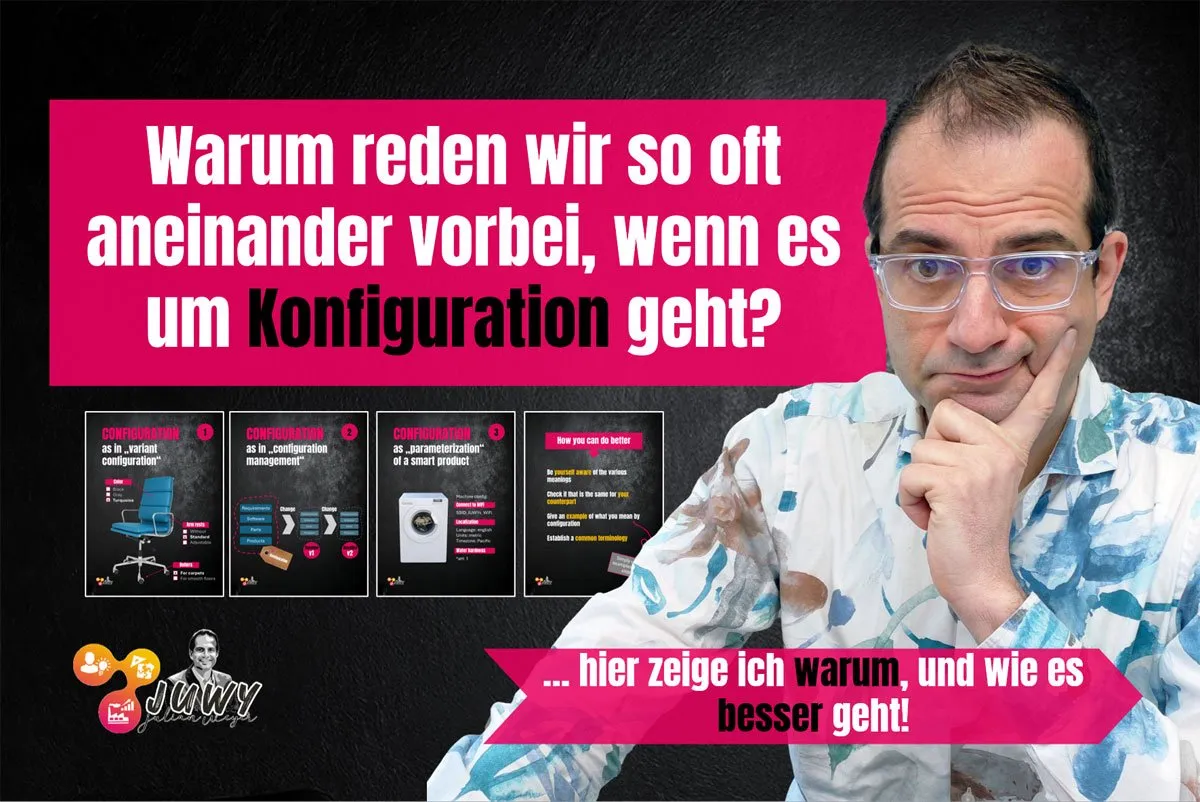

There are terms where everyone nods and nobody means the same thing. “Configuration” is one of them.
I have seen this in projects again and again: you discuss, somehow get nowhere, and the feeling creeps in that the others simply don’t understand the topic. Yet the problem is often not about substance but about language — people use the same word but mean different things.
Three meanings, one word
What makes the term configuration tricky is that in a typical product development project it can have three different meanings:
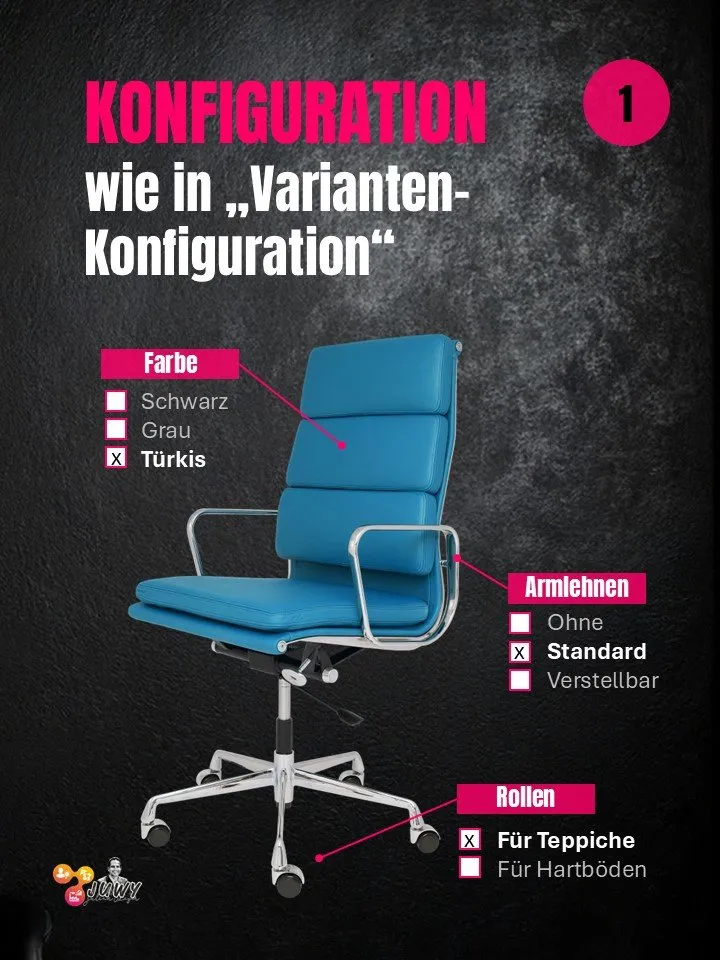

Variant configuration — the customer “configures” their product by choosing from various options: color, equipment, drivetrain. Most people know this from everyday life. In B2B, the same thing happens through CPQ systems (Configure, Price, Quote).
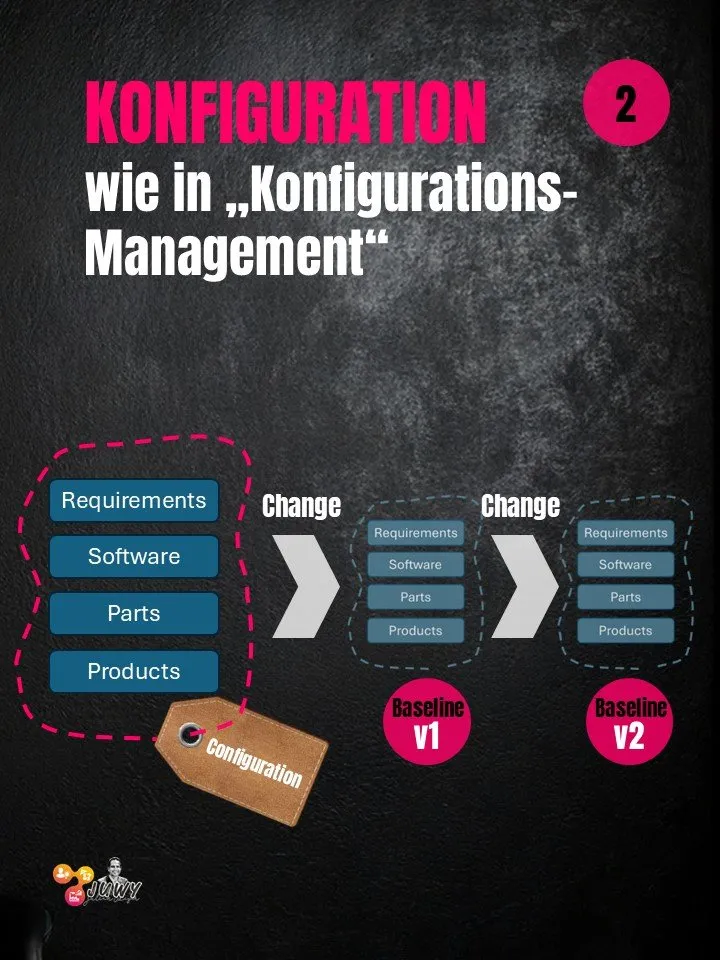
Configuration management — here “configuration” means the totality of all artifacts that together describe the currently valid product state: requirements, drawings, specifications, approvals. A baseline is then a kind of snapshot of this configuration at a specific point in time.
Parameterization — when I “configure” my CAD system or give a smart product the right settings, what I actually mean is parameterization. In everyday speech it still falls under “configuring”.
All three meanings are present in day-to-day project work. Sometimes even at the same time. A more detailed piece on the differences and what they have in common can be found here.
How confusion of terms arises
The problem does not come from ignorance. Most people who talk about configuration already know what they mean — they just assume that the other person means the same thing.
Engineers often think of configuration management when they hear “configuration”. Sales people think of the configurator. IT colleagues think of settings and parameters. All three sit in the same meeting, use the same word — and talk past each other without noticing.
The symptom: the discussion goes in circles, arguments bounce off, and someone feels that the others “don’t get it”. In fact everyone understands something — just not the same thing.
What helps
Confusion of terms does not resolve itself. But it can be avoided or quickly cleared up if you know a few simple tricks:
Self-reflection first. Before going into a meeting where configuration is a topic: which meaning do I have in mind right now? That sounds trivial, but it helps enormously with listening.
Ask actively. “What exactly do you mean by configuration — are you talking about the configurator in sales, or about configuration management in engineering?” That is not a stupid question. It is a professional one.
Work with an example. Abstract clarifications of terms often end in philosophizing. A concrete example helps immediately: “Do you mean that the customer chooses color and equipment — or that we store a baseline with all the development artifacts?”
A shared glossary. In longer projects it pays off to write terms down once. Not as an academic exercise, but as a working tool. If “configuration” is clearly defined in the project glossary, talking past each other becomes much harder.
Configuration means different things depending on the context — and in projects these contexts regularly collide. The first step toward better communication is to be aware of this ambiguity — and to ask actively when it is unclear what is meant.
As an example, you are of course welcome to simply use and link to this page.
Have you had a similar experience? Which term has caused the most confusion in your company? Feel free to write to me.